Introduction
The Pilatus PC-6, the Jeep of the skies
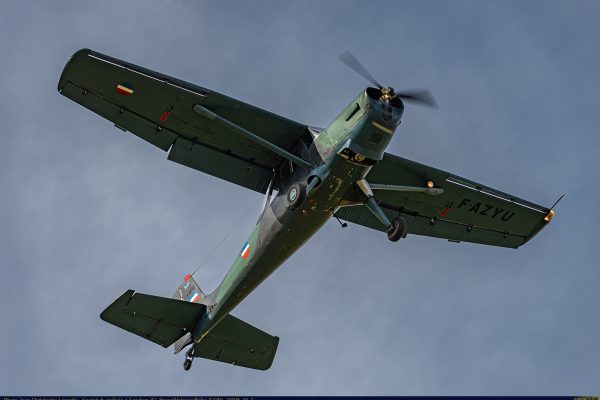
The Pilatus PC-6, the Jeep of the skies Pilatus PC-6 aircraft are used for passenger transport missions, convoying, parachute drops, and light freight delivery, including supplies of aeronautical spare parts in scheduled or emergency "red" missions. The Pilatus PC-6 Porter is a single-engine utility aircraft with short takeoff and landing (STOL) capabilities, designed by the Swiss manufacturer Pilatus Aircraft. Nicknamed the Jeep of the skies, it made its first flight on May 4, 1959, and was built under license by Fairchild Hiller in the United States. 598 aircraft were built in just over sixty years.
The aircraft has been purchased by about thirty countries to equip armed forces and public services; in total, it has been registered in 76 countries. In the civilian sector, it is widely used for parachute drops.
For the ALAT (Army Light Aviation), the crew consists of two pilots or one pilot accompanied by a mechanic; for parachute drops, the maximum is 8 parachutists. Indeed, the right front seat is fixed and cannot be turned around. For civilian aircraft, one pilot and up to nine passengers or one pilot and 9 or 10 parachutists with the right front seat facing the instrument panel.
Specifications
Engine
Pratt & Whitney Canada PT6A-27 turboprop
power: 550 hp
Dimensions
Wingspan
Length
Height
Wing area
Empty weight : 1,250 to 1,450 kg
Maximum takeoff weight: 2,800 kg
Maximum landing weight: 2,660 kg
Performance
Takeoff over 15 m obstacle: 440 m,
Landing over 15 m obstacle: 315 m,
Maximum cruising speed: 232 km/h (144 mph),
Maximum speed (VNE): 280 km/h (174 mph),
Stall speed: 96 km/h (60 mph),
Ceiling: 8,000 m,
Range: 926 km (500 nm), with additional wing tanks: 1,611 km (870 nm)
Payload: 570 kg
Photo credit: Pilatus – © Jérôme SALLES/Army of the Earth/Defense
Picture
Photo credit: Pilatus – © Jérôme SALLES/Army of the Earth/Defense